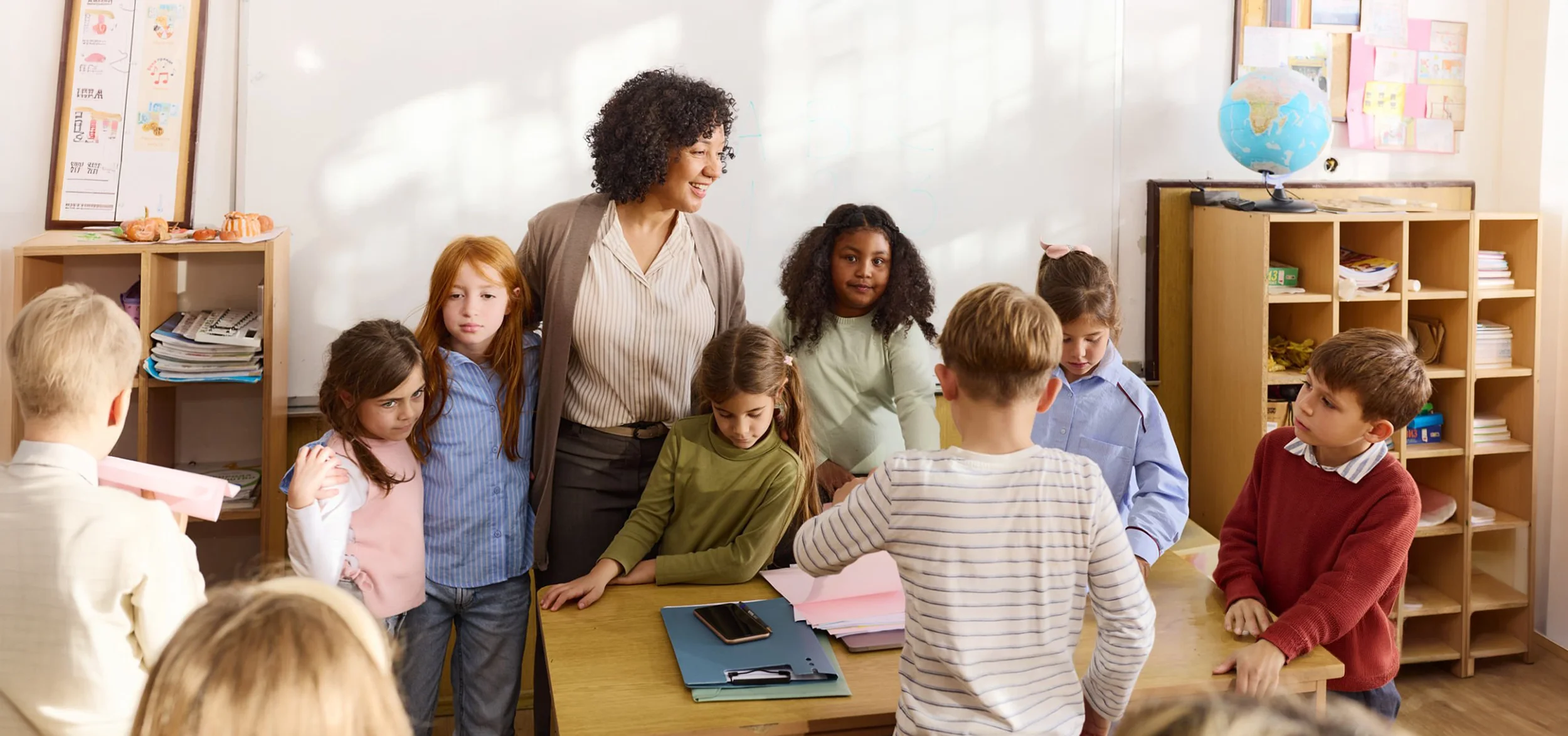
"Community is a place where connections are made, relationships are built, and support is given."
— Sandra Day O'Connor
There is something different about a classroom when children know they have a place to speak and be heard.
Not just when the teacher asks a question. Not just when they need to give an answer for a lesson. But when there is a regular time to talk about what is happening in their classroom, listen to one another, solve problems, share ideas, and work out how they can make things better together.
That is where Classroom Meetings can become the most powerful part of classroom culture.
Over the past few weeks, we have looked at some of the small routines and tools that can help shape the way a classroom feels.
We started with Classroom Agreements, inviting children to have a voice in deciding how they wanted their classroom community to work. Then we looked at Job Sharing and the importance of giving children meaningful opportunities to contribute. This week, we have been thinking about the Wheel of Choice and helping children develop ways to pause, regulate, and make choices when things feel difficult.
But children also need somewhere to bring all of those experiences together. They need opportunities to talk about what is working, what is not working, and what they can do about it.
That is where Classroom Meetings come in.
The word meeting can sound quite grown-up.
We might imagine people sitting around a table, discussing important matters, taking notes, and trying not to look at the clock.
A Classroom Meeting can be much more engaging than that.
It’s a regular opportunity for children and adults to come together as a community.
Perhaps there is something that needs solving. Perhaps someone has an idea for making the classroom work better. Maybe there is a problem that has been coming up repeatedly, or perhaps we simply want to take a moment to recognise what has been going well.
The important thing is that children are not just being talked to. They are part of the conversation.
And that can change the way they experience their classroom.
Instead of seeing problems as something the teacher is responsible for fixing, children begin to discover that they can have a role in finding solutions too.
Imagine that the same problem keeps appearing.
Children are leaving resources in the wrong place. The transition after break is becoming chaotic. Some children feel that they are not getting a turn to speak. There is a disagreement that keeps resurfacing.
Our instinct might be to step in, solve the problem, and remind everyone of what they should be doing. Sometimes we absolutely need to provide that adult leadership.
But what if we also had a regular space where we could ask:
“What’s happening?”
“How’s this affecting people?”
“What ideas do we have?”
“What could we try?”
Suddenly, the problem becomes something the class can think about together.
That does not mean every suggestion will work, or that children get to make every decision. We are still providing guidance and boundaries. But we are giving children something incredibly valuable: the experience of being taken seriously.
They get to practise listening to different perspectives, expressing their own ideas respectfully, considering solutions, and learning that problems can be worked through rather than simply endured. Those are skills they will carry far beyond the classroom.
Like the other tools we’ve explored this month, Classroom Meetings work best when they become part of the rhythm of classroom life.
If we only hold a meeting when something has gone badly, children may start to associate meetings with problems. Instead, regular meetings can become a normal part of being a classroom community.
There can be time for solving problems, but also time for celebrating contributions, sharing appreciations, discussing classroom routines, planning something together, or checking in on how the agreements are working.
And because the meeting happens regularly, children learn that their voice does not only matter when something has gone wrong.
It matters all the time.
Q-Tips for Making Classroom Meetings Work

A short, predictable meeting can be more useful than an occasional long one. Find a rhythm that works for your class and make it part of the routine.
2. Follow our simple framework.
Children are more likely to participate when they know what to expect. Always begin with compliments and appreciation, follow up on previous solutions to see how they’re working, move into the next agenda item the class wants to discuss, and finish by playing a quick game.
3. Let children help shape the meeting.
Ask them to add to the class meeting agenda as challenges arise. They should also be taking responsibility during the meeting. For example, having a notetaker, time keeper, even having one of the students lead the meeting.
4. Focus on solutions.
When a problem is raised, resist turning the meeting into a search for someone to blame. Ask questions that help children think about what happened and what could help going forward. All solutions should be respectful, reasonable, related, and helpful.
5. Give children genuine opportunities to participate.
Not every child will want to speak every time, and that is okay. Participation can include listening, suggesting ideas, helping record decisions, or taking responsibility for something the group has agreed to try. Make share to pass a talking item so that each person has a turn to share or pass.
One of the beautiful things about Classroom Meetings is that they allow children to experience something that can be difficult to teach through instructions alone.
They experience what it feels like to be part of a community where people have different needs, different opinions, and different ideas, but still have to work out how to live and learn together.
There will be meetings where the children come up with brilliant solutions.
There will also be meetings where the solution does not quite work, someone gets frustrated, or we realise we need to try something else.
And that’s okay… Because the goal is not to create a classroom where every problem disappears.
It’s to create a classroom where children gradually develop the belief that problems can be approached, voices can be heard, mistakes can be repaired, and everyone has something to contribute.
And perhaps that brings us back to where we started this month.
Classroom culture is not built in one big lesson. It is built through the small things we practise, repeat, and invite children to take part in every day.
I want to leave you with something practical for those conversations. Why not use our Small Talk Conversation Cards during your class meetings?
Small Talk: 101 Conversation Cards for Deeper Connection is now available to order.
If this month's series has reminded you of the value of real conversation, I'd love to share something I created with that in mind designed to spark meaningful, screen-free conversations, these cards help turn ordinary moments into memorable ones.
Because sometimes, all it takes is one good question.
Order now at joymarchese.com/shop.
Do you want to bring us directly to your school or organization ?
From leadership teams to full faculty, we offer customized workshops that equip educators to integrate SEL and Educational Neuroscience seamlessly into everyday teaching.
💡 Let’s partner to build stronger, more connected school communities—together.