Stop Performing, Start Connecting
“Kids don't learn from people they don't like.”
— Rita Pierson
There is a particular pressure that comes with being a teacher at the beginning of a school year.
You want the classroom to look right. You want the routines to be working, the children to be settled, the lesson plans to be going according to schedule, and, if we are being honest, you want to feel like you know what you are doing.
There is nothing wrong with any of that. Of course we want our classrooms to work. Of course we want children to learn. But somewhere along the way, I think teaching can become a little bit like performing.
We start thinking about how the lesson looks rather than how the children are experiencing it. We worry about whether everyone is listening, whether the activity is going well, whether the classroom feels calm enough, whether the other adults in the room think we have everything under control. We become so focused on getting through the lesson that we can forget the people the lesson is actually for.
I have watched this happen in classrooms, and I have felt it myself. You have carefully prepared something, you have imagined how it will go, and then within ten minutes one child is upset, another is talking, someone has forgotten their book and suddenly the beautiful lesson you planned seems to be disappearing in front of you.
The instinct can be to pull everything back into line.
“Everyone needs to listen.”
“Stop talking.”
“We have already discussed this.”
“Why are you doing that?”
Sometimes those things need to be said. But sometimes the more useful question is a quieter one: What is happening for this child right now?
That question changes the way we respond.
Imagine a child who keeps interrupting during a discussion. The easy assumption is that they are being disruptive or trying to get attention. So we correct the behaviour, remind them of the ‘rule’ and move on. But what if, instead, we paused long enough to find out what is underneath it?
“I've notice you've got a lot you want to say today. Tell me what you're thinking.” OR “I can see you have something important to share with the class, can you please write it down so you don’t forget.”
Suddenly, the interaction is different. We have not ignored the interruption. We have not abandoned the expectation that other people get a turn to speak. We have simply connected with the child before deciding what needs correcting.
That is one of the things I love about Positive Discipline. Connection is not about allowing everything. It is about remembering that behaviour is communication and that children are far more likely to respond to guidance when they feel that the adult in front of them is with them rather than simply managing them.
And this matters for teachers too.
Because when we are trying so hard to perform the role of “the teacher who has everything under control”, we can accidentally create distance between ourselves and the children we are teaching. We become the person delivering the lesson rather than the person sharing the learning with them.
I think children can feel the difference.
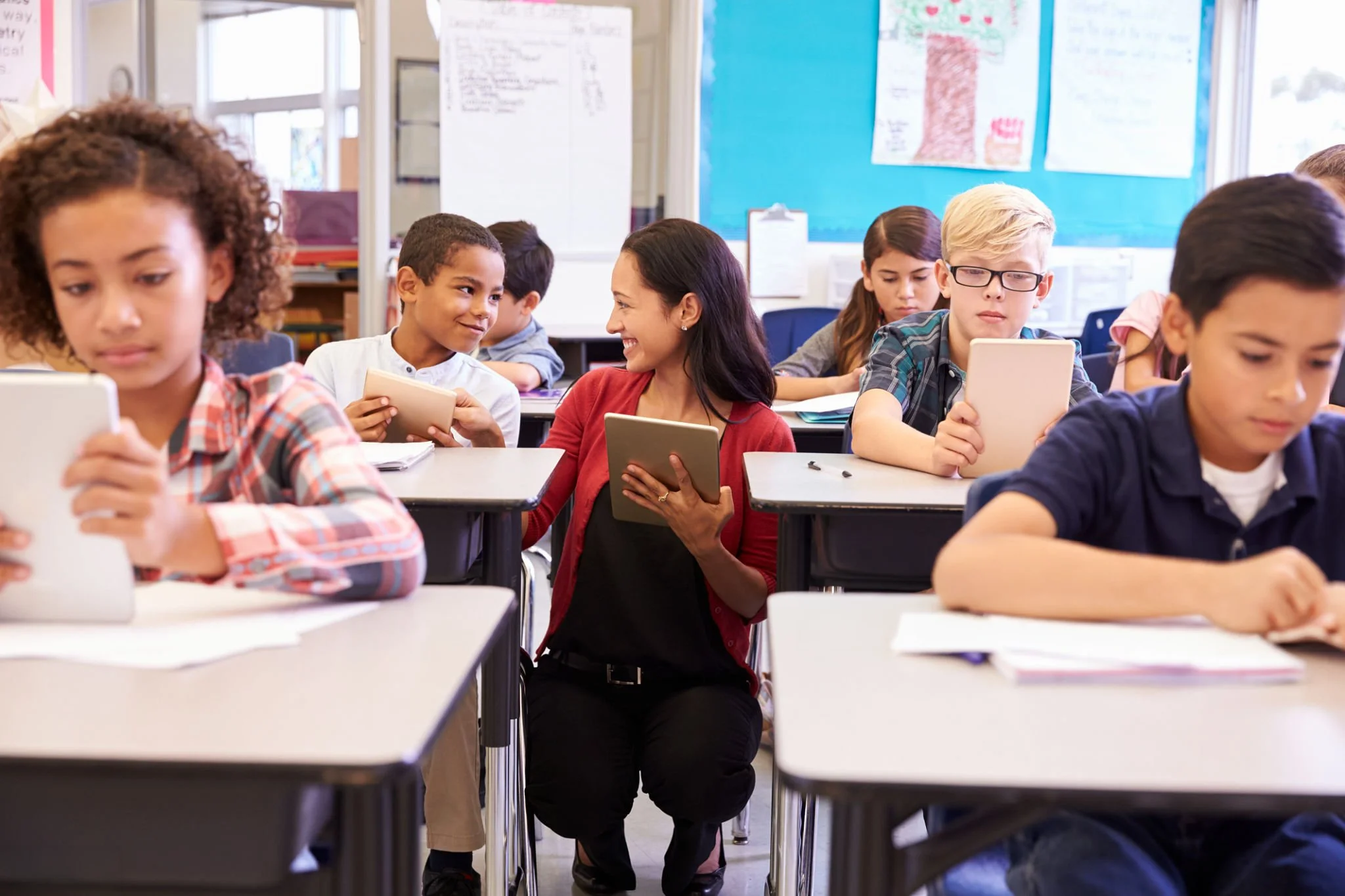
They know when you are genuinely interested in what they are saying. They know when you have noticed that they are struggling. They know when you are listening because you want to understand rather than because you are waiting for them to finish so you can tell them what to do next.
And sometimes the most powerful thing we can do in a classroom is surprisingly small.
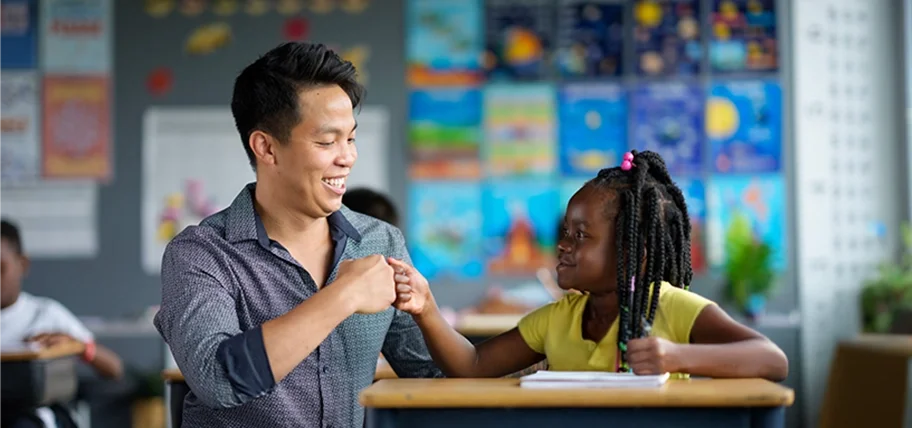
A child comes in looking upset, and instead of immediately asking them to get their materials out, you say,
“You seem a little different this morning. Do you want to tell me about it?”
A child makes a mistake and looks embarrassed, and instead of rushing to correct them, you say,
“Let's have another look at that together.”
A child is pushing against every instruction you give, and instead of escalating the battle, you get curious about what might be making cooperation difficult today.
None of these things mean the lesson stops. They do not mean expectations disappear. They simply remind us that connection is part of the teaching, not something we have to squeeze in when the teaching is finished.
And perhaps that is the shift I would love to see more of as this new school year begins.
Less performing. More connecting.
Q-TIPS: Quick Tips for Building Real Connection
1. Let one imperfect moment be imperfect
If a lesson goes sideways or you say something you wish you had phrased differently, resist the urge to cover it up. You can simply say,
“That didn’t come out quite how I meant it. Let me try again.” Showing children that adults can pause, reflect and repair teaches them far more than pretending we always get it right.
2. Ask one question you genuinely want to know the answer to
Instead of asking a child a question because it is the “right” thing to ask, try asking something you are genuinely curious about.
What did you enjoy about that?
How did you come up with that idea?
What made you choose that?
Children can tell when we are genuinely interested, and that interest opens the door to connection.
3. Notice when you’re managing instead of connecting
The next time a child is struggling, pause before immediately moving into correction mode. Ask yourself, Am I trying to get this behaviour to stop, or am I trying to understand what is happening here? That small pause can change the way you respond.
4. Share a little of your humanity
You don’t need to tell your students everything about your life, but letting them see appropriate glimpses of your real self can make the classroom feel more human. Tell them about something that made you laugh, admit when you found something challenging, or let them see your genuine enthusiasm for something. Connection grows when children meet a person, not just a role.
A classroom does not need a teacher who looks like they have everything figured out every minute of the day.
Children need a teacher who is present enough to notice them, curious enough to understand them and confident enough to guide them without losing the relationship along the way.
The lesson might not always go according to plan. The classroom might get noisy. Someone will forget something. Someone will test a boundary. Something you spent forty minutes preparing might last approximately seven minutes before going completely off course. That is teaching.
The goal is not to perform perfectly through all of it. The goal is to stay connected enough to keep teaching the children who are actually in front of you.
I want to leave you with something practical for those conversations.
Small Talk: 101 Conversation Cards for Deeper Connection is now available to order.
If this month's series has reminded you of the value of real conversation, I'd love to share something I created with that in mind designed to spark meaningful, screen-free conversations, these cards help turn ordinary moments into memorable ones.
Because sometimes, all it takes is one good question.
Pre-order now at joymarchese.com/shop.
Do you want to bring us directly to your school or organization ?
From leadership teams to full faculty, we offer customized workshops that equip educators to integrate SEL and Educational Neuroscience seamlessly into everyday teaching.
💡 Let’s partner to build stronger, more connected school communities—together.