The Greeting That Changes Everything
“No significant learning can occur without a significant relationship.”
— James Comer
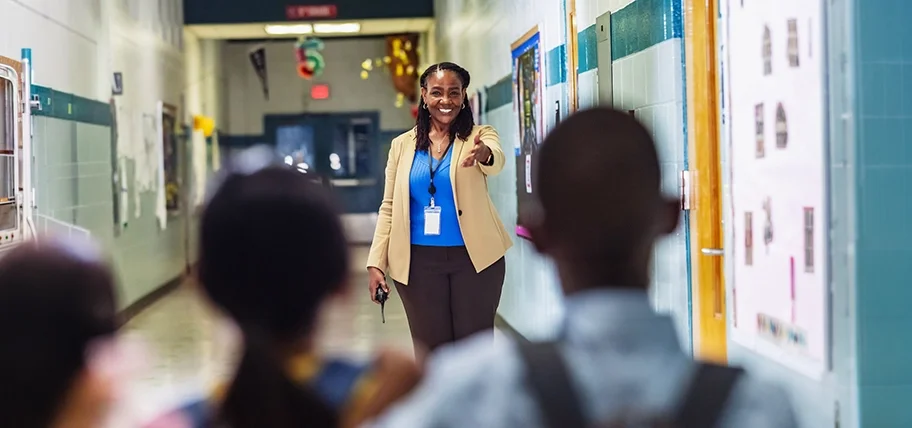
There is a moment at the beginning of every school day that happens so quickly we can almost forget it happened: A child walks through the classroom door.
Maybe they are talking before they have even put their bag down. Maybe they are unusually quiet. Maybe they are already telling a friend about something that happened that morning. Maybe they walk in looking completely fine, but you can tell from the way they are moving that something is not quite right.
And then the day begins.
There are books to hand out, registers to take, conversations to have and twenty other things that seem to need your attention at exactly the same time. It’s easy for that first interaction with a child to become something functional.
“Morning. Get your things out.”
“Good morning. You need to put your homework on the table.”
“Come on, we’re starting in two minutes.”
Nothing is wrong with any of those things. The classroom still needs to function. But I have been thinking about how much more that first moment can hold.
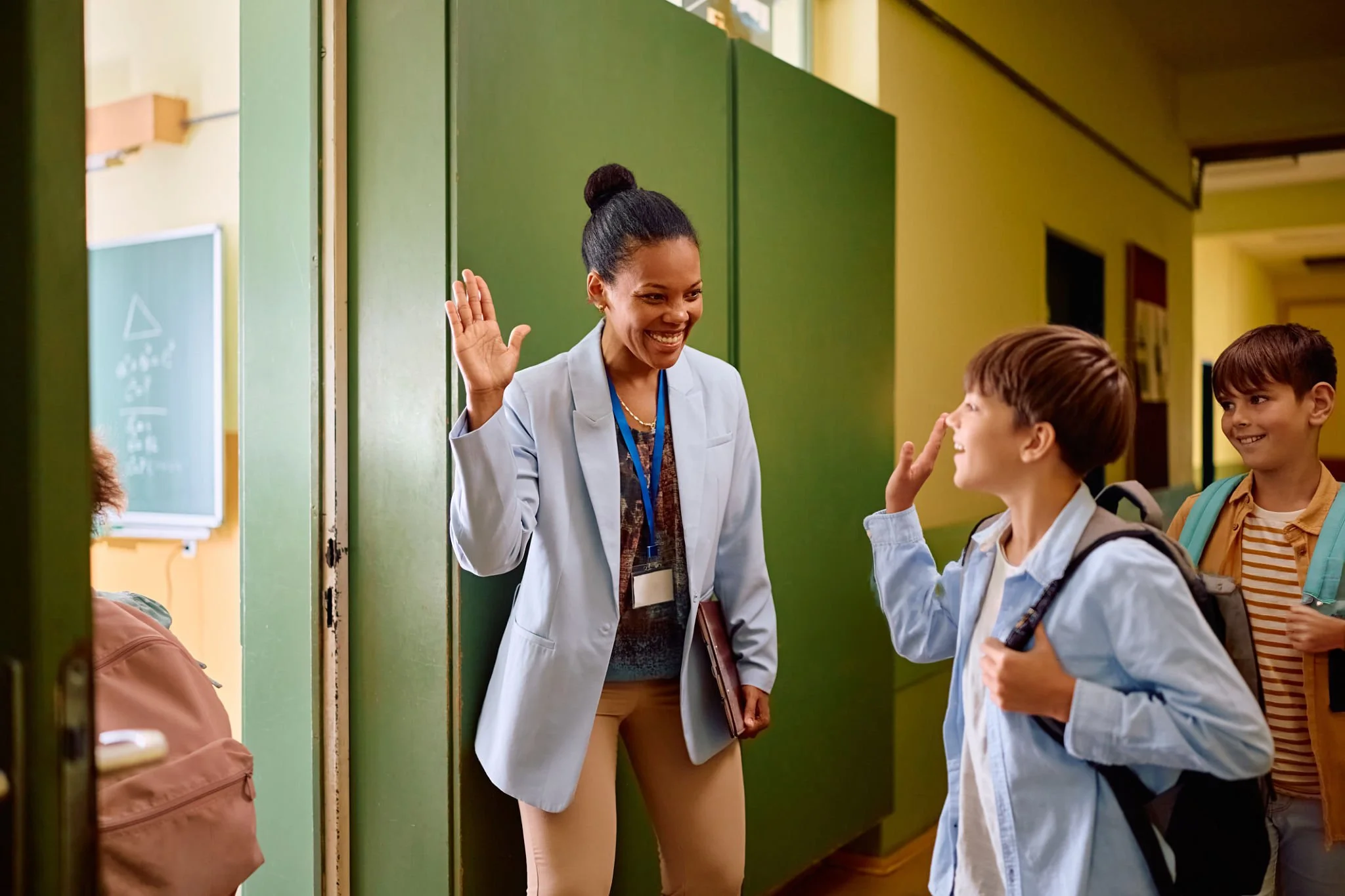
A greeting does not need to be elaborate, and it certainly does not need to be the same for every child. One child might love a high five. Another might prefer a smile and their name. Another might be the child who walks through the door barely making eye contact, and for them, a quiet “Good morning, it's lovely to see you” might be enough.
The point is not the particular greeting, it is the connection underneath it.
When we greet children intentionally, we are doing more than being polite. We are beginning the day by communicating that they are individuals rather than simply another person on the register, another set of books to mark or another child we need to keep on task.
And that can matter enormously, particularly for children who are finding school difficult.
This is where the Positive Discipline tool of greeting children at the door can be so powerful. Rather than beginning the day by immediately directing children towards what they need to do, we begin by connecting with them as people.
You do not need a special programme. You do not need ten extra minutes every morning. You do not even need to stand at the door perfectly greeting every child in exactly the right way.
You can simply begin noticing the opportunity. Use their names. Make eye contact. Smile. Let the greeting be genuine rather than rushed.
“Morning, Sam. How are you today?”
“Good to see you, Maya. How was your weekend?”
“Morning, Alex. I remember you were excited about your match. How did it go?”
The message is consistent: You belong here. You are noticed here. Your teacher knows you are more than what you produce.
But there is important worth remembering too: Not every child will greet you back
Some children will enthusiastically meet you at the door and tell you everything that happened before breakfast. Others will walk straight past you as though you are part of the furniture.
Do not take it personally. Connection is not always immediately visible.
The quiet child who gives you the smallest nod may still have noticed that you said their name. The teenager who pretends not to care may still register that you remembered something they told you yesterday. The child who never wants to talk in the morning may need you to simply keep showing up with the same warmth.
We are not greeting children to get a particular response from them.
We are greeting them because that is the kind of classroom we want to create.
Q-TIPS: Quick Tips for Starting With Connection
1. Greet children at the door whenever possible. Use their name and offer a simple, genuine welcome.
2. Give children choices. A wave, smile, high five or verbal greeting can all communicate connection. Let children find what feels comfortable for them.
3. Notice rather than interrogate. If a child seems unusually quiet, you do not need to demand an explanation. A warm greeting can simply let them know you are available.
4. Make the greeting about connection, not compliance. Try to avoid turning “Good morning” into an immediate list of instructions. Give the relationship a moment first.
5. Watch what happens when the children start greeting each other. That is when a simple Positive Discipline tool starts becoming something bigger: a classroom where belonging is something everyone helps create.
Start the year at the door. As the new school year settles into its routines, it can be tempting to focus on everything we need children to learn.
We need them to know the timetable. We need them to understand the expectations. We need them to remember where everything goes, how transitions work and what happens when something goes wrong.
All of that matters. But before we can build those routines, we are building something underneath them: A relationship.
And one of the simplest places to begin is at the classroom door.
This week, try greeting your students with a little more intention. Notice what happens when you use their names, make eye contact and give them a moment of genuine welcome before moving on to the next thing.
You might notice that the child who usually arrives withdrawn starts lingering for an extra few seconds. You might discover that the chatty child has something important they have been waiting to tell you. You might simply notice that the room feels different when the first interaction of the day is connection rather than correction.
It may only take a few seconds.
But those few seconds can tell a child something that they carry with them long after they have sat down at their desk.
I want to leave you with something practical for those conversations.
Small Talk: 101 Conversation Cards for Deeper Connection is now available to order.
If this month's series has reminded you of the value of real conversation, I'd love to share something I created with that in mind designed to spark meaningful, screen-free conversations, these cards help turn ordinary moments into memorable ones.
Because sometimes, all it takes is one good question.
Pre-order now at joymarchese.com/shop.
Do you want to bring us directly to your school or organization ?
From leadership teams to full faculty, we offer customized workshops that equip educators to integrate SEL and Educational Neuroscience seamlessly into everyday teaching.
💡 Let’s partner to build stronger, more connected school communities—together.