The Classroom You Have Not Met Yet
“The child has a different relation to his environment from ours... the child absorbs it.”
— Maria Montessori
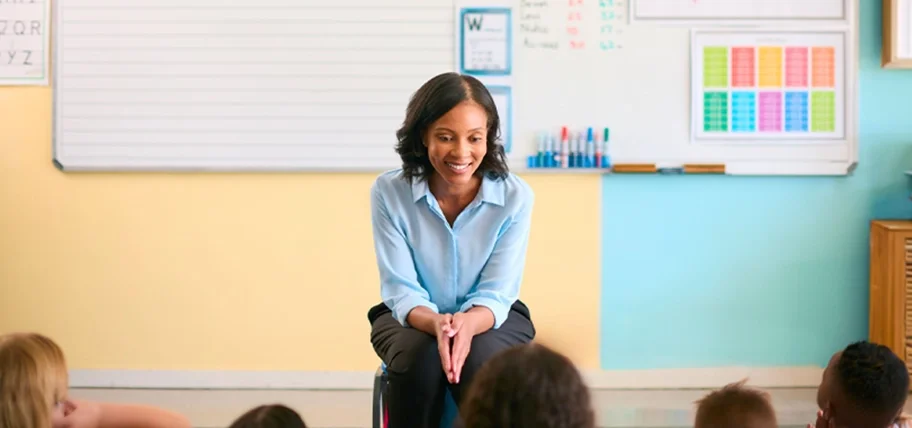
The classroom is ready, the resources are organised, the displays are up, and somewhere there is probably a list with the names of all the children you are going to be spending the next year with. You have thought about your lessons, your routines, your expectations and perhaps even spent some of the summer wondering what this particular group might be like.
And then they walk through the door, and suddenly all of that preparation becomes only part of the story. Because there they are.
A room full of individual children, each arriving with their own experiences, personalities, friendships, worries, interests and ideas about what this year might hold.
Some will walk in confidently and start talking before you have even finished saying hello.
Some will hang back and quietly take everything in.
Some will want to tell you everything about their summer, while others will need a little more time before they are ready to tell you anything at all.
There will probably be someone who makes you laugh before you have even taken the register, and someone else who tests every boundary you have put in place before lunchtime.
And the funny thing is, you don’t know yet which is which.
I think that is one of the most wonderful and challenging things about the beginning of a school year. We know their names before we know their stories.
We might have information from their previous teacher, from their school records or from conversations with their families, and all of that can be helpful, but there is another kind of knowing that only comes with time. It comes from watching a child when they think nobody’s paying attention, from noticing what makes them light up, from discovering who they naturally sit beside, what they talk about when they’re excited and what they do when something feels difficult.
It comes from all those tiny observations that slowly turn a name on a register into a person you know.
And I think we sometimes put too much pressure on ourselves to make those judgements very quickly. We want to know who needs extra support, who’s going to struggle, who will be the class clown, who needs more challenge, who will be our natural helper and who might need a little more of our attention. Of course, noticing these things is part of being a good teacher. But I wonder if there is something useful in reminding ourselves, especially in those first few weeks, that we have not met this class yet.
We are still meeting them. That distinction matters because children can surprise us.
A child who keeps interrupting might be struggling to wait.
A child who refuses to take part might be feeling uncertain about themselves.
A child who constantly makes everyone laugh might be looking for belonging.
This is one of the reasons I have always found connection before correction so useful. It doesn’t mean that we ignore behaviour or remove boundaries. Children need boundaries, and teachers need to be able to lead their classrooms. But it does invite us to become curious about what might be underneath the behaviour rather than immediately deciding what the behaviour tells us about the child.
The behaviour still needs responding to, but our response can begin with curiosity rather than a label. That becomes particularly important when we remember how quickly children can become the story we tell ourselves about them.
Those things will eventually prove useful observations, but in September they are still only pieces of a much bigger picture. Children change when their environment changes. They change when they feel safe, when they experience success, when they find a friend, when someone notices something they’re good at or when they discover that the adult in front of them genuinely believes they can do something they were not sure they could do.
So perhaps one of the best things we can do at the beginning of the year is resist the urge to have everyone completely figured out.
Instead, we can get curious.
Q-TIPS: Quick Tips for Meeting Your Class With Fresh Eyes

1. Try learning one thing that has nothing to do with schoolwork. Choose a child each day and find out something about them simply because you want to know them better. Over time, those small pieces of information become part of the relationship.
2. When a behaviour catches your attention, pause before you label it. Ask yourself, What else could be going on here? You may not always get the answer right, but the question keeps curiosity in the room.
3. Look for something that surprises you. Each day, notice a strength, interest or quality in a child that you hadn’t expected to see. Let your understanding of them keep expanding.
4. And give yourself time. You don’t need to know your class completely in September. Your job is not to have them figured out. Your job is to keep getting to know them.
You will get some things wrong. You will make assumptions that turn out not to be true. You will discover strengths you could not have predicted and challenges you could not have planned for. There will be days when you wonder whether this class is ever going to find its rhythm, and there will be other days when something happens that reminds you exactly why you love doing this.
And they are also a reminder that the relationship is still developing.
That is not a failure of your preparation. That is what it means to teach people rather than programmes.
You are meeting a group of children who are still becoming who they are, and you are going to become a slightly different teacher because of them too.
The classroom you have planned matters, of course. But the classroom you have not met yet is where the real story begins.
I want to leave you with something practical for those conversations.
Small Talk: 101 Conversation Cards for Deeper Connection is now available to order.
If this month's series has reminded you of the value of real conversation, I'd love to share something I created with that in mind designed to spark meaningful, screen-free conversations, these cards help turn ordinary moments into memorable ones.
Because sometimes, all it takes is one good question.
Order now at joymarchese.com/shop.
Do you want to bring us directly to your school or organization ?
From leadership teams to full faculty, we offer customized workshops that equip educators to integrate SEL and Educational Neuroscience seamlessly into everyday teaching.
💡 Let’s partner to build stronger, more connected school communities—together.