“The beautiful thing about learning is that nobody can take it away from you.”
— B.B. King
There is always that one moment at the playground when a perfectly lovely afternoon threatens to turn into a diplomatic crisis.
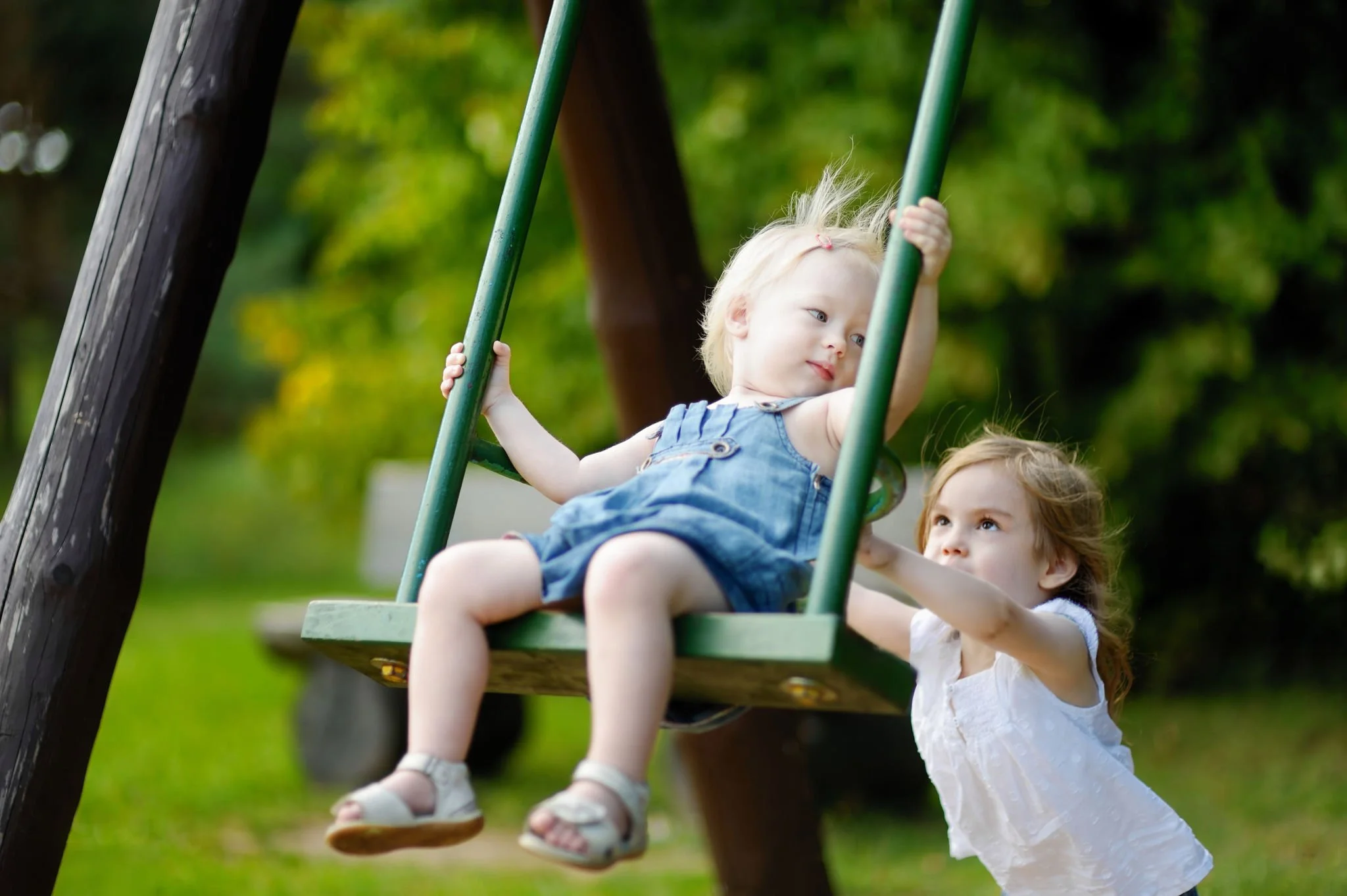
It usually starts with something small. Two children want the same swing. One insists they were there first, the other is convinced they have been waiting long enough, and neither seems particularly interested in hearing the other side. Before long, there are raised voices, a few unhappy faces, and parents suddenly finding themselves involved in negotiations they never expected to have that afternoon.
We want our children to get along, of course. We want them to share, take turns, be considerate and remember that other people have feelings too. But knowing what to do in the middle of a disagreement is not always as easy as it sounds, especially when emotions are running high and everyone seems to be watching.
And perhaps that is what makes the playground such an interesting place to learn.
At home, they’re known. Everyone knows their name, their little quirks, how they like their toast cut and what usually makes them laugh. At school, they have a teacher, familiar routines, rules they’ve practised and classmates who have had time to get to know them.
But at the park, things are different. Nobody knows their story. Nobody knows that they’re usually very good at taking turns, that they’ve had a difficult morning, or that sharing their favourite things doesn't always come easily. They're simply one child among many, trying to work things out with other children who have their own ideas, feelings and expectations.
There are only so many swings, after all, and a whole collection of unwritten rules that most adults follow without even thinking about them.
They have to learn how to find their place while making room for others, too.
If you’ve ever felt your child go missing in action at the exact moment the whole playground seems to be watching, you’re in very good company.
When these moments happen, it is worth paying attention to our own reactions, too. Sometimes we're not just parenting our child. We're parenting in front of an audience, and that can make us feel as though we need to step in quickly and show everyone that we're handling things. Our voices get a little sharper, and before we know it, we're reaching for the familiar instructions: “Share!” “Give someone else a turn!” “Say sorry!”
Of course, these are all things we'd like our children to learn. But in the middle of a disagreement, those words don't always give them much help with what to do next.
Think about the child who has been enjoying the swing and is suddenly told to give it up. To a five-year-old who loves swinging, “share” can sound like being asked to walk away from something wonderful without knowing when they'll get it back. It is a little like being told to let something go without having any idea what comes next. Most of us would find that difficult, too.
We’ve been using being kind and firm for the past weeks at times like this. We can begin by getting down to our child's level, keeping our voices calm and acknowledging what they're feeling. “You really love that swing, and it's hard to stop.”
That simple acknowledgement doesn't mean we're agreeing that they can stay on it indefinitely. It means we're showing them that their feelings matter, even when a limit still needs to be held. Then we can be clear about that limit: nobody pushes, nobody grabs, and the swing is for everyone to enjoy. From there, we can help children find a way forward rather than simply telling them what to do.
“Would you like five more pushes before it's her turn, or shall we count to twenty?”
“What could you do while you wait?”
Now the child has something concrete to work with. Taking turns becomes a plan with an ending, rather than a sudden loss of something they enjoy. The child waiting for the swing has a part to play, too.
We can help them practise asking, “Can I have a turn when you're finished?” and learn that the answer might be, “After five more pushes.”
Waiting is not always easy, but knowing what to expect can make it a little more manageable.
And when the children eventually work it out, they've practised something much more valuable than simply taking turns. They've had an opportunity to listen, express what they want, consider someone else's needs and find a solution together.
And once we begin looking beyond the swings and slides, we start to notice just how many opportunities the playground offers for children to practise being part of a community.
Q-Tips: Teaching Children How to Be Part of the Wider Community
1. Start with the feeling, then hold the limit. “You really love that swing, and it’s hard to stop. And it’s her turn soon.” Be kind and firm: nobody grabs or pushes.
2. Give waiting an ending. “Five more pushes, then it’s her turn.” Children can wait when they know how long, and a timer or a count does the work for you.
3. Teach the small phrases in advance. Practise “Can I have a turn?”, “Would you like some?”, and “Do you want to play?” at home, then notice when they use them.
4. Check with the grown-up before sharing food. Teach children to ask, “Is it okay if I share?” It respects the other family, and it keeps allergies in mind.
5. Narrate what you notice. “I’m picking this up so nobody trips.” “That little boy looks new, shall we say hello?” Children learn kindness from watching us do it.
These aren't chores or little performances of good behaviour. They're everyday ways of learning to care about the people and places around us. A child who invites someone into a game, looks out for a smaller child or helps care for a shared space is beginning to understand that being part of a community comes with opportunities to contribute.
And, of course, much of this learning happens by watching us. The playground gives us plenty of little opportunities to show children what that care looks like in practice.
We might say, “I'll move my bag so there's room for everyone,” or “I'm going to pick that up. It could be dangerous for the little ones.” Perhaps we notice a child standing on their own and say, “Let's go and say hello. He looks new here.”
These might seem like small, ordinary comments, but they're worth saying out loud. Children can't hear our thoughts, after all. If we want them to notice the people around them, we need to let them hear what we're noticing, too.
And since it’s November, it’s worth saying that this is a gentle way of practising gratitude. A child who’s been waiting for the swing and finally gets it feels something different from a child who never had to wait. A child who’s been offered a cracker by a stranger remembers it, probably longer than the cracker deserves.
Gratitude is built from small moments of being included, and the people who give them don’t have to know your name.
The swing, for the record, will be free again in about ninety seconds. It always is. But what both children just learned about how to be around people they may never meet again will last a lot longer than that.
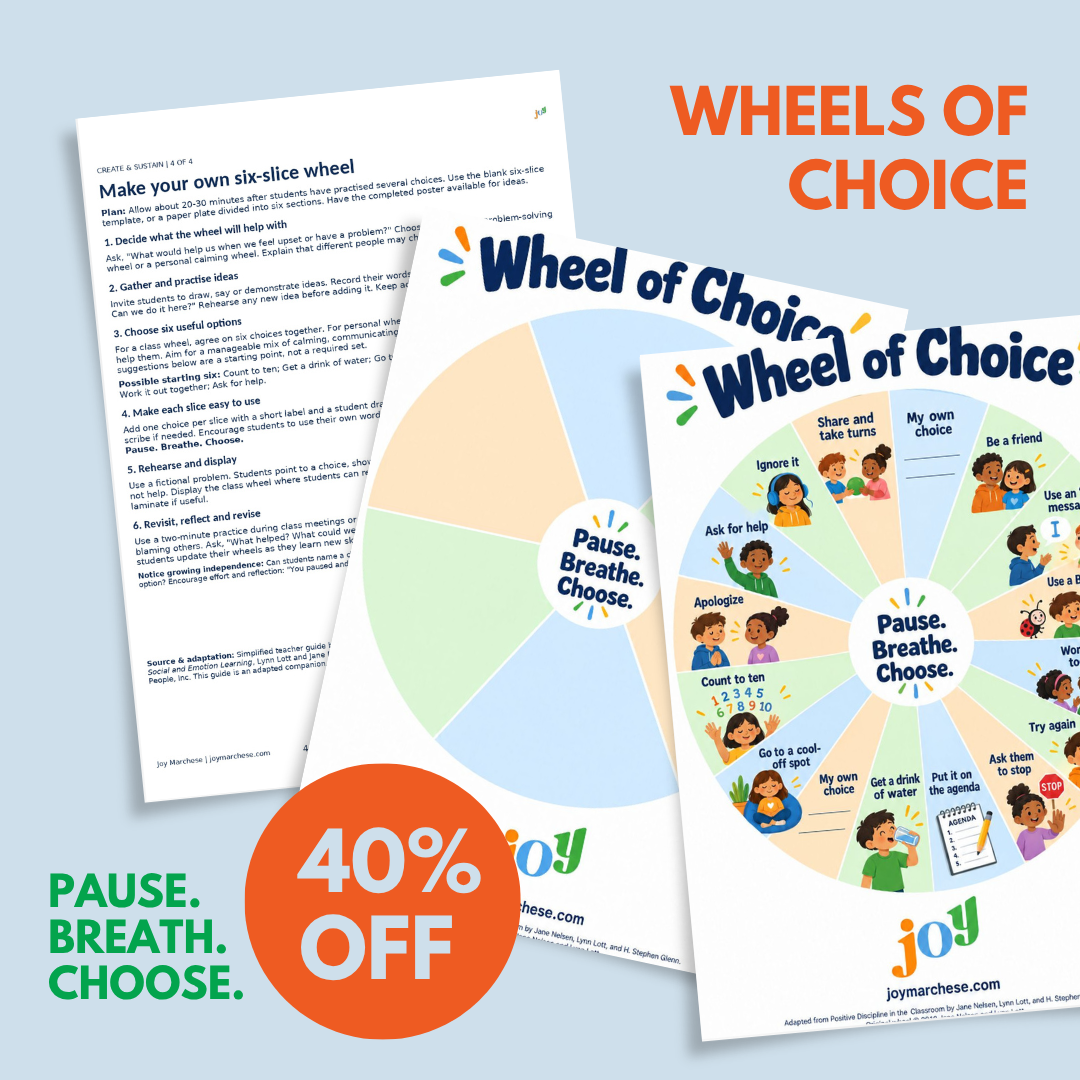
Ready to bring the Wheel of Choice into your classroom?
I've created a practical teaching resource to help you introduce the wheel, practise different strategies with your students, and make it part of your classroom routine.
You can download the free Wheel of Choice template below to get started, or get the full teaching guide on Teachers Pay Teachers for just $3, reduced from $5 (40% off).
I want to leave you with something practical for those conversations. Why not use our Small Talk Conversation Cards during your class meetings?
Small Talk: 101 Conversation Cards for Deeper Connection is now available to order.
If this month's series has reminded you of the value of real conversation, I'd love to share something I created with that in mind designed to spark meaningful, screen-free conversations, these cards help turn ordinary moments into memorable ones.
Because sometimes, all it takes is one good question.
Order now at joymarchese.com/shop.
Do you want to bring us directly to your school or organization ?
From leadership teams to full faculty, we offer customized workshops that equip educators to integrate SEL and Educational Neuroscience seamlessly into everyday teaching.
💡 Let’s partner to build stronger, more connected school communities—together.